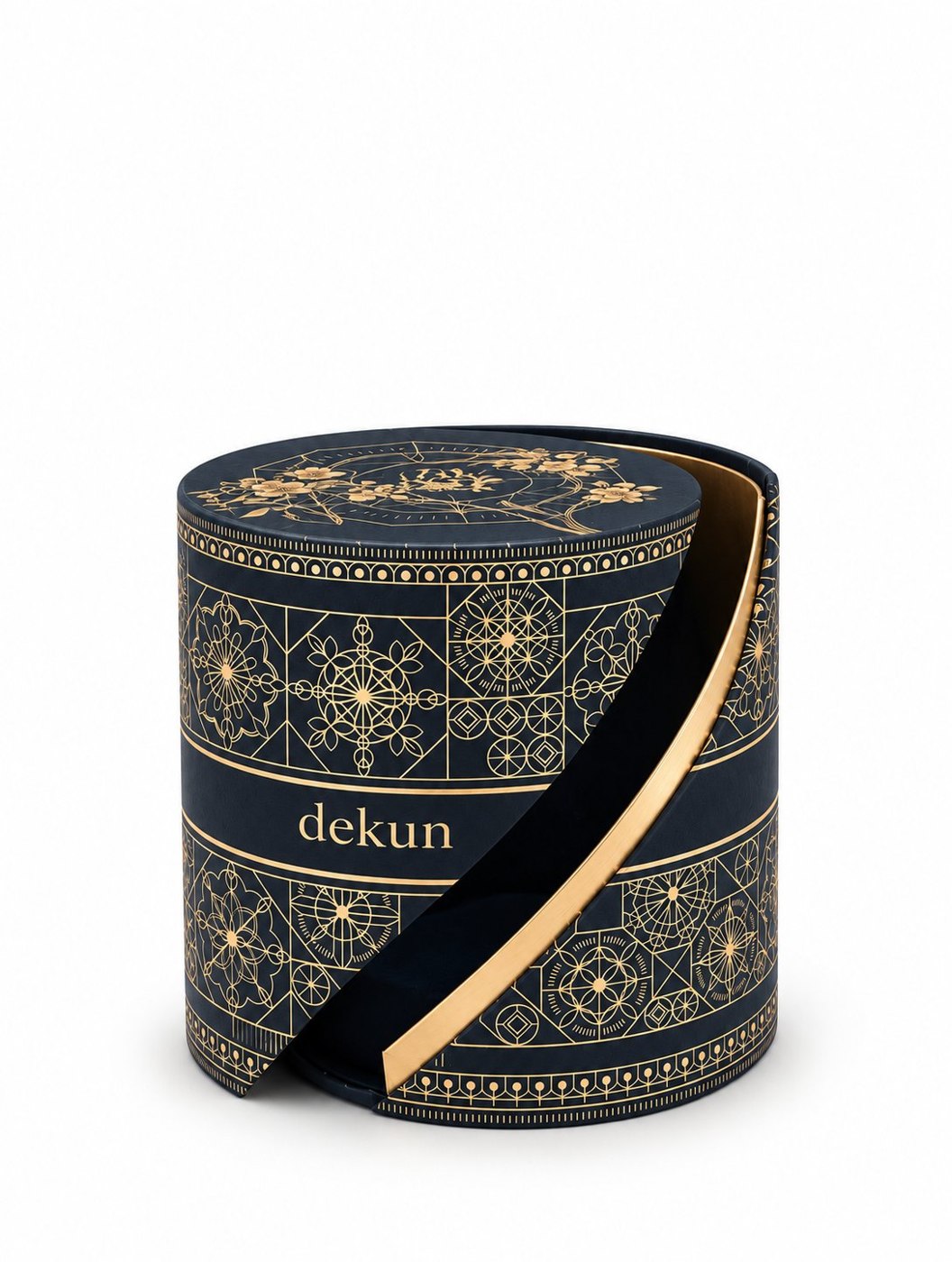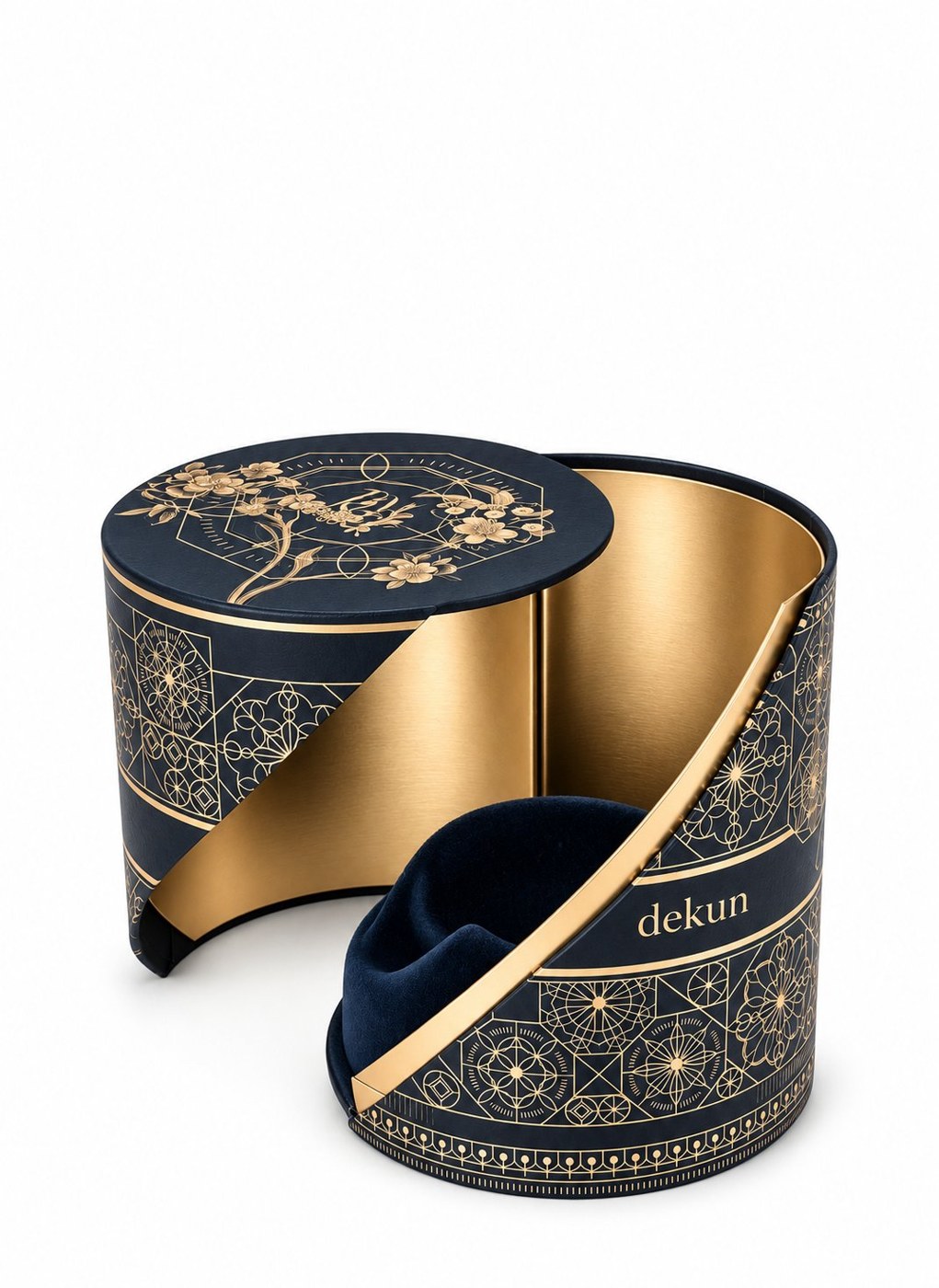
A normal cylinder lid meets its body on a flat, horizontal line. The wrap paper runs around the curve in one direction, the board's grain behaves, and the seam can hide at the back. A spiral cut removes every one of those comforts.
The edge never runs with the grain
Wrap paper has a grain direction, like wood. Along the grain it bends cleanly; across it, it resists and eventually cracks. A spiral edge crosses the grain at a constantly changing angle — so along a single edge, you get every behaviour from perfect to impossible, in sequence.
The second problem is registration. The foil pattern on the lid has to continue across the spiral onto the body. On a flat box that's a printing problem; on a spiral it's a geometry problem, because the "same point" on the lid sits at a different height at every angle around the cylinder.
"The seam is the design. If the seam is wrong, nothing else about the box matters."
How it gets solved
Two things fix it. First, the pattern is mapped on the flat dieline with the spiral's pitch built in, so wrapping becomes alignment rather than luck. Second, the edge is finished in two passes — the structural wrap first, the decorative foil second — so a foil slip never becomes a structural failure.
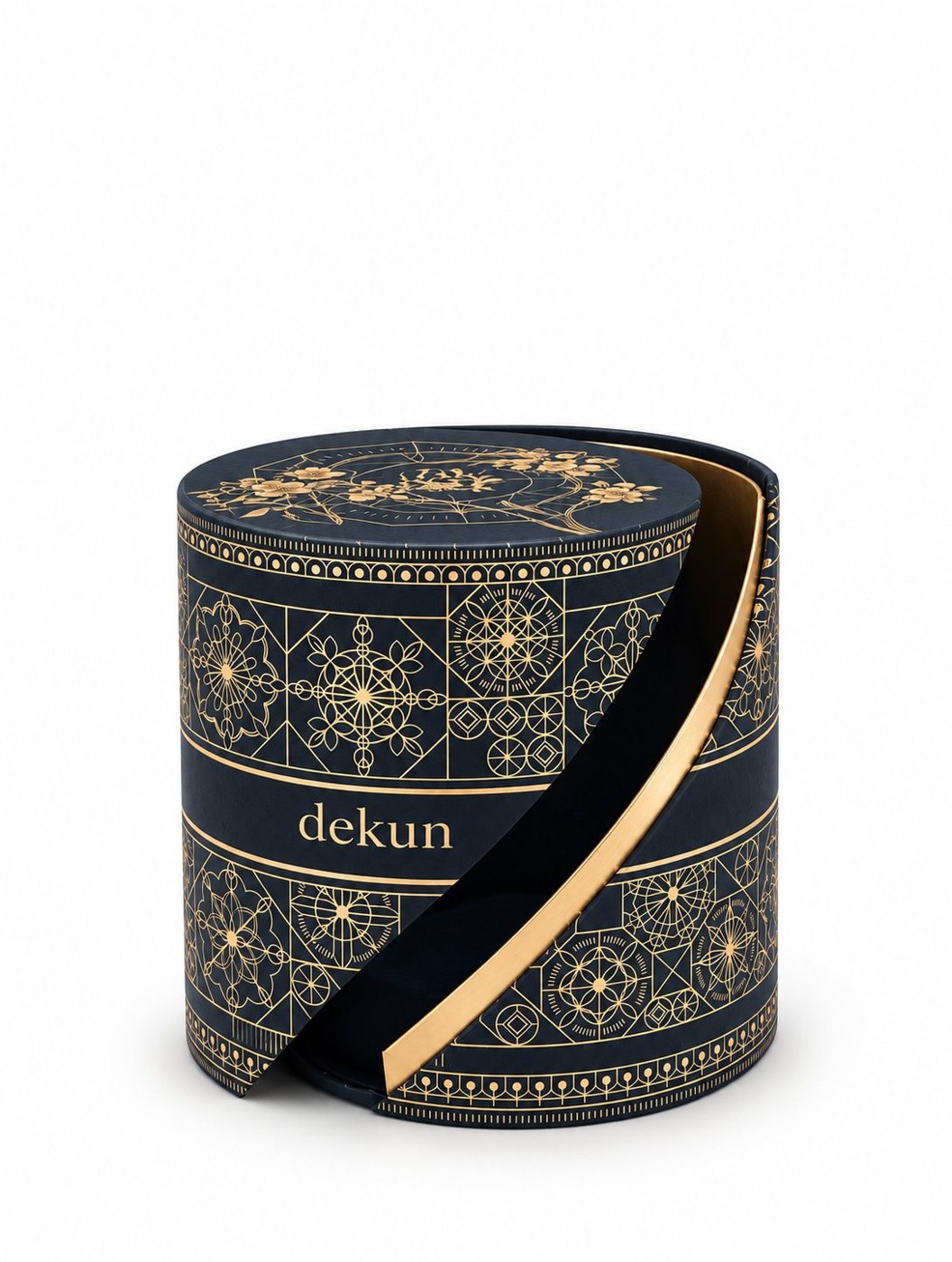
None of this is visible in the finished box, which is exactly the point. The buyer sees a cylinder that opens like a secret. The factory sees geometry, sampling and alignment. Both are right.